Poland’s Capacity Market faces a real-world stress test
What happened?
Poland's capacity market is being put to work. On 30 June 2026, PSE, the Polish Transmission System Operator, announced capacity market stress events (recall periods) for the evening hours of 18:00–21:00, later extended to 21:00–22:00 — barely five weeks later, on 4 August, the operator declared further recall periods for 17:00–18:00 and 18:00–19:00, shortly followed by another capacity market recall for 6 August, covering the evening hours from 17:00 to 22:00. During these hours, all entities holding capacity obligations must deliver: generators make their capacity available to the operator or inject it into the grid, while contracted demand-side units reduce consumption.
All three events followed the same script: high demand driven by heatwaves, low forecast wind generation, and unavailability of conventional units. PSE stressed that the system remains stable and prepared for the heat-related demand — the recall mechanism is doing exactly what it was designed for. The price signal told the same story: on 4 August, an exceptionally wide gap opened between midday and evening prices, with hourly rates between 19:00 and 21:00 climbing to around 1,850 PLN/MWh.
Why does it matter?
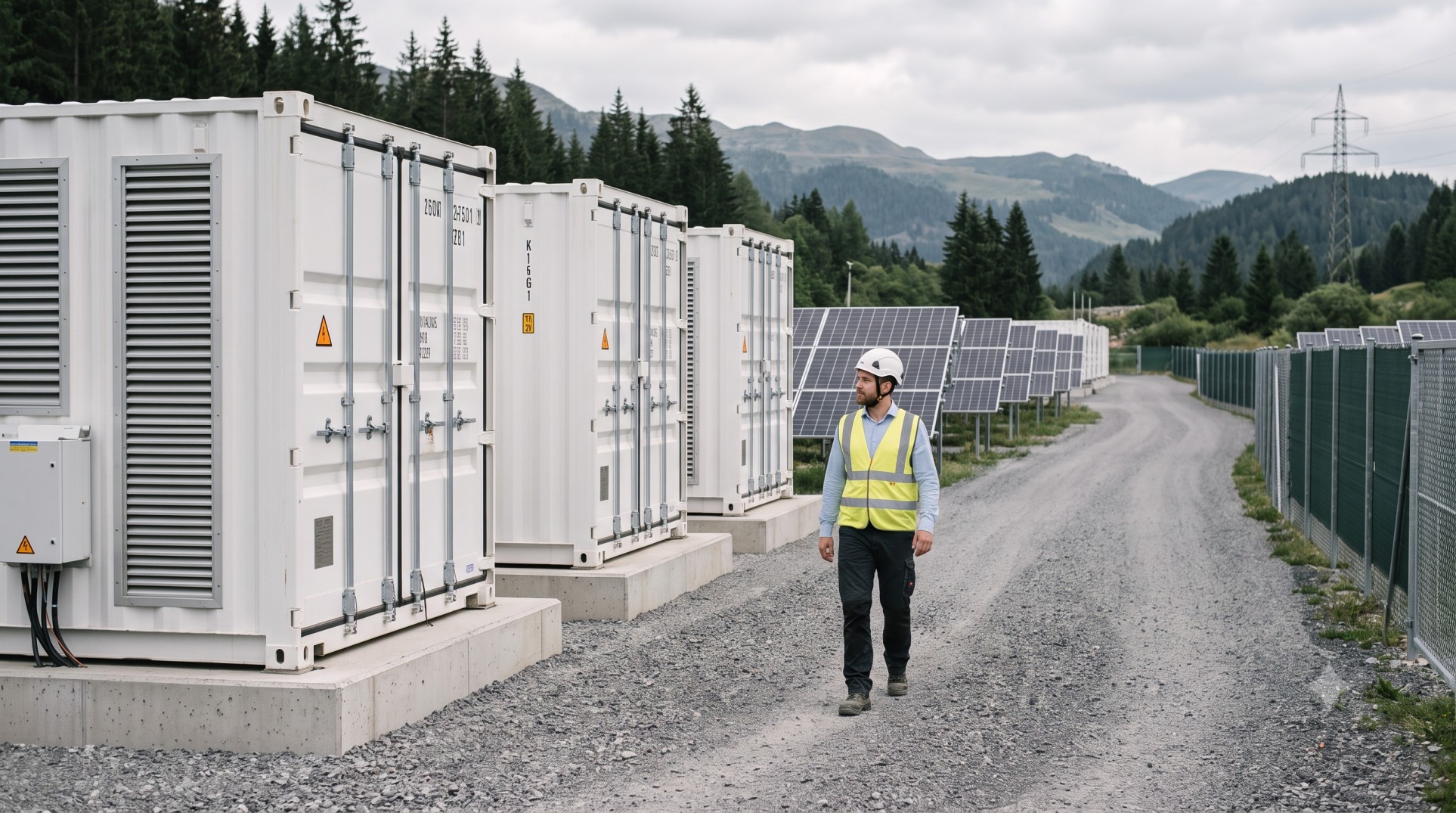
Capacity market recall periods used to be rare events. Between the mechanism's introduction in 2021 and mid-2026, PSE had activated recall periods only twice — in September 2022 and November 2024. Now Poland has seen three activations in one single summer within weeks, all landing in the evening ramp when solar fades and demand holds, precisely the hours when batteries discharge.
What does it mean for BESS?
For BESS owners with capacity contracts, the message is twofold. First, the capacity obligation is a genuine performance commitment: dispatch readiness and disciplined state-of-charge management determine whether an asset earns its capacity payments or faces penalties. Second, the same stress hours that trigger recalls are also where the arbitrage value sits — capturing both requires an optimizer that manages capacity obligations and market positions as one integrated strategy. As coal retirements accelerate, expect these summer evenings to become a fixture of the Polish market, not an exception.
Spain improves the conditions for BESS development and bankability
What happened?
Spain introduced two significant regulatory developments for battery storage.
First, Real Decreto-ley 18/2026 strengthens the rules governing grid-capacity reservations. Non-payment of the applicable reservation fee can now trigger the automatic expiry of access and connection permits. Expiry becomes mandatory when unpaid amounts exceed 10% of the quarterly due fee. The decree also modifies the electricity generation tax, IVPEE, reducing it to 3.5% in 2027 and eliminating it entirely from 2028.
Second, the European Commission approved a €9 billion market-wide Capacity Market for Spain. The ten-year mechanism will allocate approximately €900 million annually through competitive auctions open to generation, demand response and storage assets that commit to being available during scarcity events.
Why does it matter?
The measures address two of the main challenges facing Spain’s storage pipeline: access to scarce grid capacity and sufficient revenue visibility.
Stricter reservation rules could remove projects that are holding capacity without the ability or intention to proceed, creating opportunities for projects that are genuinely ready to reach construction and connection. At the same time, the Capacity Market introduces a potential source of long-term contracted revenue, while the IVPEE phase-out reduces the tax burden on electricity generation.
What does it mean for BESS?
More effective allocation of grid capacity could support viable projects currently blocked by connection constraints. Because battery discharge is treated as generation under Spanish tax law, the reduction and eventual removal of the IVPEE should directly increase net revenue per discharge cycle.
Capacity Market revenues could also become an important part of the BESS revenue stack, particularly during the first years of operation when securing financing is often most challenging. However, these payments will come with availability obligations, making reliable operations, state-of-charge management and multi-market optimization essential.
Together, the developments move Spain beyond simply enabling storage: they begin to create the conditions under which BESS projects can become investable and bankable.
Germany puts co-location and grid access rules under review
What happened?
On 29 July, the German Cabinet approved the EEG-Novelle 2027 (renewables law) and the Netzanschlusspaket (Grid Connection Package), following a short consultation launched on 17 July. The proposals now move into the parliamentary process and may still change before entering into force.
Together, the reforms aim to align renewable energy and storage development more closely with market signals, available grid capacity, and regional system needs.
Why does it matter?
The reforms could significantly change how renewable energy and storage projects are developed and connected in Germany.
The EEG reform strengthens direct marketing and introduces measures intended to reduce solar feed-in peaks, increasing the need for flexibility. However, the industry still requires clarity on how parts of the new framework will affect the economics and operation of co-located storage.
At the same time, the Grid Connection Package moves away from a purely first-come, first-serve allocation and sets the criteria for network operators to prioritize projects.
What does it mean for BESS?
The direction is positive for co-located and grid-supportive storage, but grid access will become more conditional and location-dependent.
Projects that share existing grid capacity or accept flexible connection conditions may benefit from faster access. However, developers will need to assess how charging and discharging restrictions affect revenues, balancing-market participation, and bankability.
The final framework will determine how far these new connection options translate into better project economics for battery storage in Germany.
Next steps: Both drafts must still be approved by cabinet before proceeding through the parliamentary process.
Stay up to date
Get our latest updates on an ongoing basis on our LinkedIn channel and sign up for our quarterly newsletter down below.